
All services
Service 05
Field Line Repairs & Replacements
Drain field diagnosis, repair and full field line replacement to restore absorption and stop surfacing effluent.
(256) 504-9653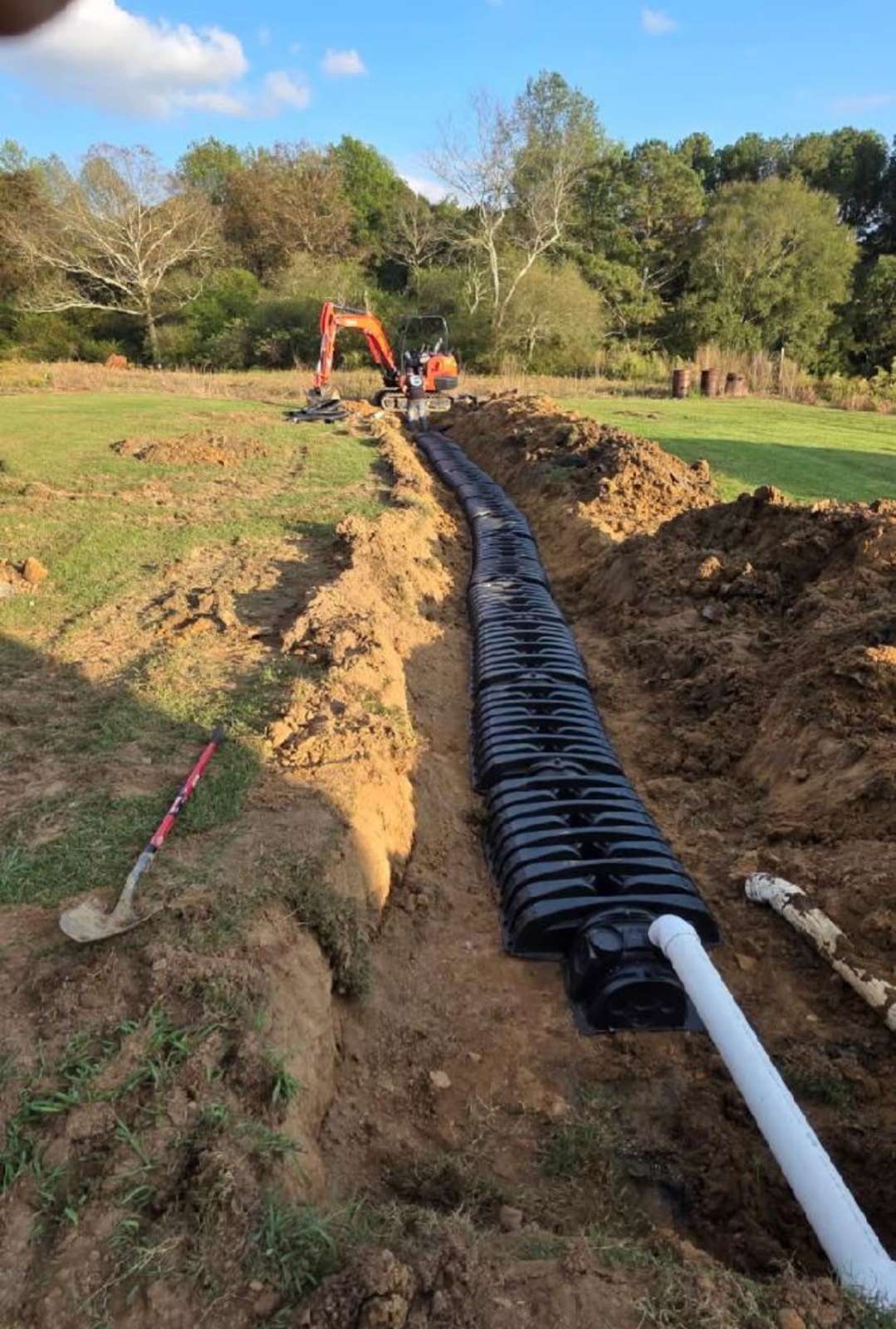
Soggy ground, standing effluent and slow drains usually mean the field lines — not the tank — have failed. We diagnose the real cause: biomat buildup, crushed or root-invaded pipe, undersized runs, or soil that has stopped absorbing. Repairs range from replacing a single collapsed lateral to installing an entirely new field in relocated, permitted ground. Everything is graded, gravelled and backfilled properly so the system performs for decades, not seasons.
How it works
Our process
- 01Diagnosis of the failure cause, not just the symptom
- 02Camera and locating confirmation of line condition
- 03Permit coordination for replacement fields
- 04Excavation, new lateral and distribution box install
- 05Grading, backfill and site restoration
Common questions
FAQ
- Can a field line be repaired instead of replaced?
- Often yes. If the failure is one crushed lateral or a blocked distribution box, a targeted repair is far cheaper than a new field.
- Why is water surfacing in my yard?
- Surfacing effluent means the drain field can no longer absorb flow. It should be assessed quickly — it is both a health hazard and a sign of progressing failure.
- How long does a new field take?
- Typically one to three days after permit approval, depending on field size and soil conditions.
- What Is a Septic Drain Field?
- The drain field is the part of a septic system that returns treated wastewater to the soil. It may also be called a leach field or absorption field. After solids stay behind in the septic tank, liquid wastewater flows toward the drain field.
- What Are Septic Field Lines?
- Field lines are usually perforated pipes placed in trenches. Small openings let wastewater leave the pipe and move into gravel or another approved material before entering the soil. The lines spread water over a larger area so the ground is not overloaded in one place.
- Can Pumping Fix a Drain Field?
- Pumping removes waste from the septic tank and can reduce pressure on the system, but it does not repair a failed drain field. If the soil or field lines can no longer accept wastewater, further repair may be needed.
- Can You Build Over a Drain Field?
- A drain field should generally remain open. Buildings, pavement, patios, and heavy structures can block air, trap water, compact soil, or damage pipes. Keeping the area open also allows access if repairs are needed later.
- How long does a drain field last?
- Life expectancy varies based on soil, design, water use, maintenance, and system loading.
Something's not draining right?
Tell us what you're seeing and we'll tell you what it actually is — no scare tactics, no surprise line items.